Everyone for Ten Minutes
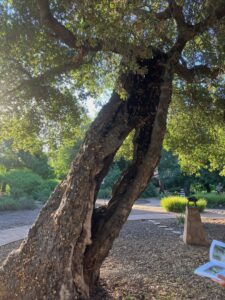 I just spent a lovely week at a health resort in Tecate, Mexico, with 50 or 60 other guests. One of the people I met early in the week was a recently first-time elected official I’ll call Serena. We bonded/commiserated over the privilege and challenge of public service and shared some of the high and low points in our political journeys.
At mealtimes, most people happily sit at tables of 6 or 8 people and try to get to know each other a bit. Most of the guests turn out to be wonderfully interesting and quite diverse – this time there was a retired woman cattle rancher; someone who offers workshops based on her near-death experience some years ago and her subsequent study of others who have come back from near death; amazing musicians; an anti-corruption attorney; a retired foreign service officer, and many more.
 When I revealed that I had been elected to public office and served for four years, or when Serena shared her job title, people were very interested, very concerned about the state of our democracy, and very appreciative of our having stepped up to run for office. But most were not at all engaged themselves, other than keeping up with the news. While it has been more than a decade since I was elected, and I have done many other things since then, this piece of my resume seemed of most interest. And I still feel the need and desire to continue advocating for greater civic engagement from everyone. My new friend and I probably said to someone at every single meal, or to the whole table if they were listening, that they should get involved, run for office, volunteer for a commission, or at least actively support good candidates, including after they get elected.
One of the activities at this resort was a workshop on improv which led to a performance by the six of us brave guests who stuck with it. The main rule of improv, I learned, is to say “yes and” instead of “no” when presented with a new or unexpected situation. Accept what is and figure out what to do about it. Saying “no” and rejecting reality doesn’t really get you anywhere. This is a good lesson for life as well as for improv.
 Another rule is to have each other’s back. If a scene is floundering, someone else can step in and support the storyline, or redirect it so it works. In public office, this is also essential. Most people only speak out when they’re unhappy about a situation. They write angry letters to the editor or post comments on social media or just gripe to their friends. That’s ok, but it’s also important to acknowledge what is going well. Let an elected official know that you appreciate their vote on that issue you care about. Write an op-ed supporting your local government when they fix a problem. If there is unfair criticism in a community paper or public social media site, chime in and set the record straight, or at least offer a different point of view.
Everyone has a voice, whether in elected office or not. Every citizen has a vote, which is another type of voice. And everyone spends money. Every time you express your opinion, you move the needle a bit. Every time you vote, you help shape government. And every time you buy something, you are endorsing the entity whose products or services you are procuring. Wouldn’t it be nice if we used our voices wisely, based on realistic expectations, knowledge of the opportunities and constraints around our issues, and supported responsible businesses that strengthen our communities? We have the power. Silence can be deadly.
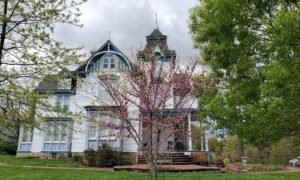 A Mormon, a Mennonite, and a Unitarian walked into a historic inn and gave me hope.
 So what did we talk about at the breakfast table? Sustainability. Climate Change. Carbon footprints. Regenerative agriculture. Open space conservation. I’m pretty sure we do not identify the same way politically (the innkeepers ask that we not talk politics at the table) but we were all on, or close to, the same sustainability page. This gives me hope. We talked about shared values and common concerns. We related as human members of our society. THIS is what we need to do more!
 Whether you believe that some higher power, possibly called God, created the world and gave “man” dominion over all the creatures, or you think we are part of an interdependent web of all existence where no specie is more important than any other, everyone at our table agreed that we have a responsibility to be good stewards of the environment. Religious differences, in other words, but core values that were the same.
 When I said I thought the there were significant benefits offsetting the costs, Dave did acknowledge the intangible benefits (which I would argue can be made tangible) in terms of recruitment and retention of talent, as well as direct savings from reducing waste, reusing water in industrial processes, energy efficiency, and longer-term benefits from reducing future severe weather events. It’s hard to operate a factory in a tornado, wildfire, flood, or extreme heat event. And possibly more important than all this in terms of giving me hope, he was PROUD that he was working on these issues.
 The innkeepers joined in the end of our breakfast discussion. They belong to a green tourism association, recently joined a CSA program, and proudly explained to me their municipal composting program, among other “green” initiatives.