Is it too late?

I am terrified at the prospect of Donald Trump returning to the White House. I am so frustrated that our judicial system has not been able to hold him accountable and actually bring him to trial so he can be judged and found guilty of the crimes we know he committed. Having him on record asking an election official to find votes for him; seeing photographs of highly classified documents unsecured and improperly taken to a private residence; and all the actions and inactions related to the January 6 insurrection — surely an impartial judicial process would lead to multiple convictions. But still, there he is, enabled by Republican legislators and activists who either don’t understand or don’t care about the idea of handing power to a man who has repeatedly demonstrated that he is only out for himself, that he doesn’t respect the rule of law, and that he has no regard to the public good.
I could go on, but that’s not the point of this blog post. The point of this blog post is to explore what can be done, now, before it is too late.

For the record: I know Joe Biden is an imperfect candidate on the other side. I am horrified by what is happening in Gaza and the apparent inability or unwillingness of the administration to use the leverage we have to bring an end to the violence. I also know that Donald Trump would be even more pro-Netanyahu and anti-Palestine. I also see an amazing record of Biden administration accomplishments, despite the dysfunction in Congress, of using the power of the federal government for the benefit of communities around the country, making us safer, healthier, and more productive. The economy is strong, and moving in the right direction.
Call me naive, but I still believe that people hold power. All the elected officials we disdain were put there as a result of elections – the folks who voted and those who stayed home are responsible for the Mike Johnsons and the Jim Jordans and the Matt Gaetz’s of the world. If someone else had gotten more votes, that someone else would now be in those offices. There are obstacles to overcome, starting with how we fund our elections, but those obstacles can be removed with the right people in power.
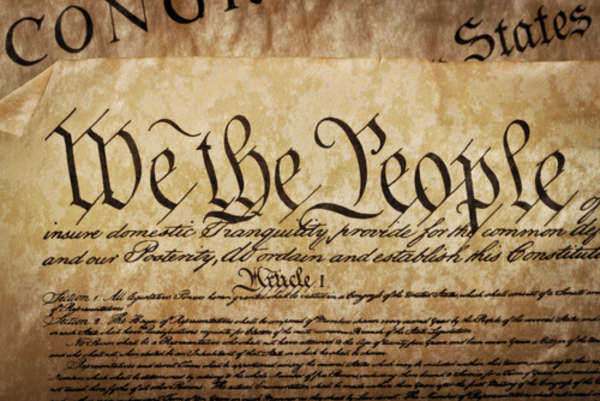 It is not a new idea. But it matters now more than ever. WE THE PEOPLE hold the power. We can run for office, we can educate ourselves about who is running for office at every level – school boards, local government, all the way up the chain. We can get involved in political party bureaucracy and try to influence the choices of who runs and who gets funding and other types of support.
 There may not be many Republicans who read this blog, but I wish there were more courageous Republicans who would work to take back the reins of their party. It would be good for the country to have a diversity of viewpoints within the fundamental framework of our constitutional democracy. How can we engage and empower all eligible voters to have their views and values represented and their rights protected? We need to offer more choices across the political spectrum. I’m not anti-Republican as I used to understand the Republican Party. I disagreed with many of their positions, but as President Biden said in the State of the Union address, “you can’t love your country only when you win.” I’m proud to have been a civil servant in both Democratic and Republican administrations in my years in Washington.
In my four years on the Encinitas City Council, I won some and lost some, and that’s how it should be. Not every idea is a winner, and honest debate, open-minded listening, and mutual trust can often lead to a better outcome. But I fear the current political establishment lacks all three of those needs – there is dishonesty and intentional disregard of facts; there is more posturing than listening; and there is a deep lack of trust.
 What to do? It takes leadership and time to move us into more productive waters. We first need to do everything possible to make voting safe and secure; to support and protect election officials who are essential in performing this sacred duty. Then we need to encourage and support good candidates from both parties who demonstrate integrity and a commitment to serve for the common good, not for personal power.
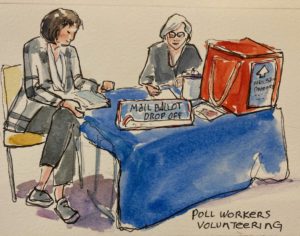
 Help register people to vote. Offer to work at voting centers. Join a civic organization and learn about the role of different offices and work to elect people you trust. Donate money to candidates and organizations that are working to promote your views and values. Among other things, I have written over 3000 postcards to voters across the country in elections at all levels of government to encourage them to vote. It is vital to VOTE in every election you are eligible for. You vote is your voice. It matters. For the sake of my granddaughter, I have to believe it’s not too late!
 Why be a voter at all? It’s confusing. Does it make any difference anyway? Yes, voting matters. Do you want your school board to ban books or discussion of certain topics? Or do you want teachers to focus on teaching critical thinking skills by presenting controversial topics and helping kids think for themselves? Your vote for in school board elections determines who decides. At every level of government, decisions are being made that impact your life. Fundamental rights are being defined and expanded or limited by Supreme Court justices appointed and approved by the president and Senate – all elected officials. The people making decisions about housing, transit, and climate action are the people that WE elect. If we choose different people, we get different outcomes. So, how do you become an educated voter? Step one: register to vote. It’s easy. If you live in San Diego, go to SDVote.com. If you live somewhere else, look up your Registrar of Voters. Just to be sure, do it TODAY! In general, there are three types of elections: primary, general, and special. The primary election determines who the candidates will be in the general elections that are held every two years in November. Not every office has a primary – some are just in the general election. Special elections can happen at any time to fill vacancies, for example, when an official dies or leaves office for another reason. Once you are a registered voter, you should receive information about specific elections that you are eligible to vote in.
 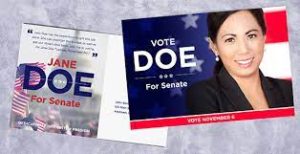 You will see and hear ads, and get lots of mailings and other communications about candidates and issues. Read and listen carefully. Always look at the source, follow the money, and consider what their agenda might be. Mailings must include “paid for by.” Look up any organization you don’t recognize to see who’s behind it. Fact check and talk to knowledgeable friends and colleagues. Consider setting up a potluck discussion group to share information and opinions.
 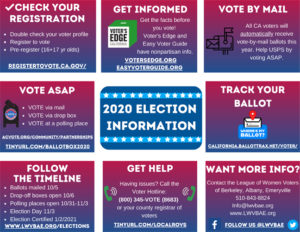 Nonpartisan organizations, like the League of Women Voters, offer objective information. The League studies issues and offers pros and cons for major ballot questions. They post candidate statements and studies on the VotersEdge.org website. The League never endorses candidates but takes positions on some ballot questions. Go to candidate forums and hear directly from the candidates. A challenger with no track record can easily promise to solve difficult problems but may not really understand the legalities and complexities that an incumbent must address. Look beyond specific issues to the candidate’s character, values, and experience. You don’t know what might arise in the future. Past actions speak louder than empty words. No candidate will be perfect. Choose the ones that you think will take us in the general direction you want, or at least the one who isn’t going to take us in a direction you don’t want. “Confirmation bias” makes us inclined to accept information that matches existing beliefs and reject conflicting views. Think critically. Vote wisely. The health and well-being of our families, our communities, and our nation depend on it.