Whose Power Is It Anyway?
 I learned in school that our system of government is based on the idea that we grant power through our electoral system. Every citizen is entitled to vote for the candidates that best represent that voter’s preferences, and the candidates who earn the most votes are entrusted with certain powers according to the office to which they were elected. In the legislative bodies, whether a local city council or the US Senate, laws are enacted and policies adopted based on majority rule – the ideas that have the support of the majority of elected officials in that body become part of our societal and legal framework. When I was on the city council in my town, I could vote on budgets and zoning changes and capital investments within the limits of my city. I did not have the authority to intervene in school board, county, state, or national level issues other than expressing support or opposition. The power to act at those levels of government were reserved to the people elected to those offices.
 I am deeply troubled these days by the increasingly frequent attempts by elected officials to intervene way outside the boundaries of their authority. Whether it’s congressional committees threatening state prosecutors or senators threatening judges, it’s not acceptable. What’s even worse is when elected officials, once they get into power, try to change the system and replace or undermine legitimate opposition so they can hold onto power even when they would lose a fair and open contest of ideas in a free and open election.
It is a sign of weakness, not strength, when a so-called leader is afraid to put their ideas and their track record to a fair test. In Israel, the prime minister is trying to take control of the court system while he is under active indictment. In Georgia, the state legislature is making the district attorney subject to recall based on politics while there is a prosecution underway that the legislators want to block. In other states, gerrymandered voting districts are created to improve the chances of re-election for those already in power.
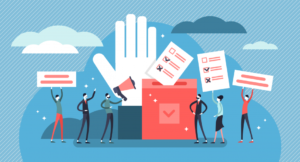 But here’s the thing. Those people taking those actions were elected. We, the citizens, by voting or not voting, by engaging or not engaging in the political process, we gave them the power they are now using to further their own interests and to undermine our democracy. Yes, the system is rigged. It favors those in power. It’s hard to beat an incumbent. But it can be done and it must be done.
I cannot imagine how some members of Congress got elected – who in their right mind would vote for Marjory Taylor Green or Lauren Boebert? But somehow, they got more votes than their opponents. Yes, there is deception and misinformation and voter suppression. But there is also truth and justice and activists willing to do the hard work of registering and educating voters. When people who are elected and given power use that power for the greater good, to improve the lives of people, and to care for those in need, we can do great things and rebuild the torn social fabric in our country and beyond.
 It is hard work. It is dangerous work. But I refuse to accept that we have to keep giving power to people who consistently block sensible gun safety measures, like a ban on assault-style weapons and large ammunition sales and universal background checks. This is not what the people want. We know that most people want better gun safety. Nobody wants to fear sending their children to school. The majority see the folly of expecting teachers to take on police responsibilities when we have seen even trained police officers failing to protect school children from armed shooters.
We have the power if we choose to use it. We can do better than we’re doing now. In the 2022 election, we showed some of the potential that grass roots activism can achieve. We have to keep it up and do more.
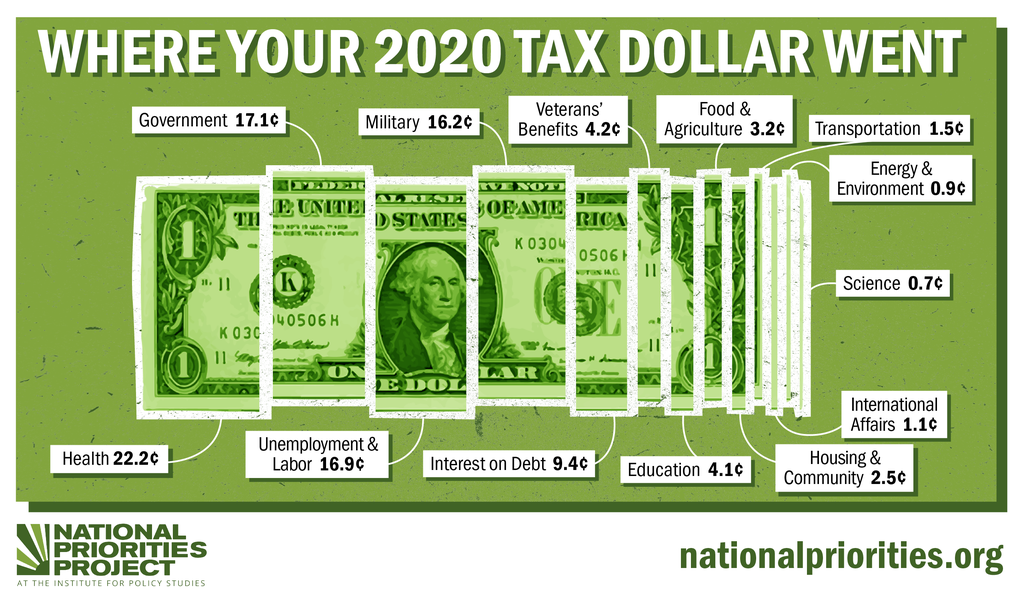
 It’s tax time, and I think we need to understand that our tax payments are an investment in a well-run public sector (some of which operates well today, and some of which is in need of significant reform). Without an effective government, we would not have measurement standards, for example. I could claim that my package weighs a pound whether or not it conformed to an official definition of a pound, and you, as a consumer, would have no way of knowing. You could not enforce a contract without a court system to hold signatories accountable. I could make a competing product using your corporate name and logo if there were no trademark protections. All of these things matter.
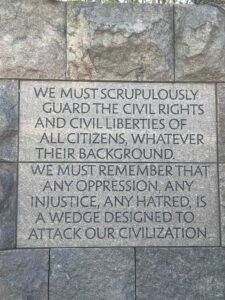
 If we only apply the laws that we like, and if we spew lies and make threats against the legal system when they hold people accountable who we want to protect, we damage our whole society. We know there are imperfections everywhere. We know that systemic bias exists. It has been well documented. We need better education and systemic reforms that are based in reality – not imaginary problems created by space lasers or dead people. Everyone’s rights deserve to be equally protected. There is much work that is needed. Violence is not the answer.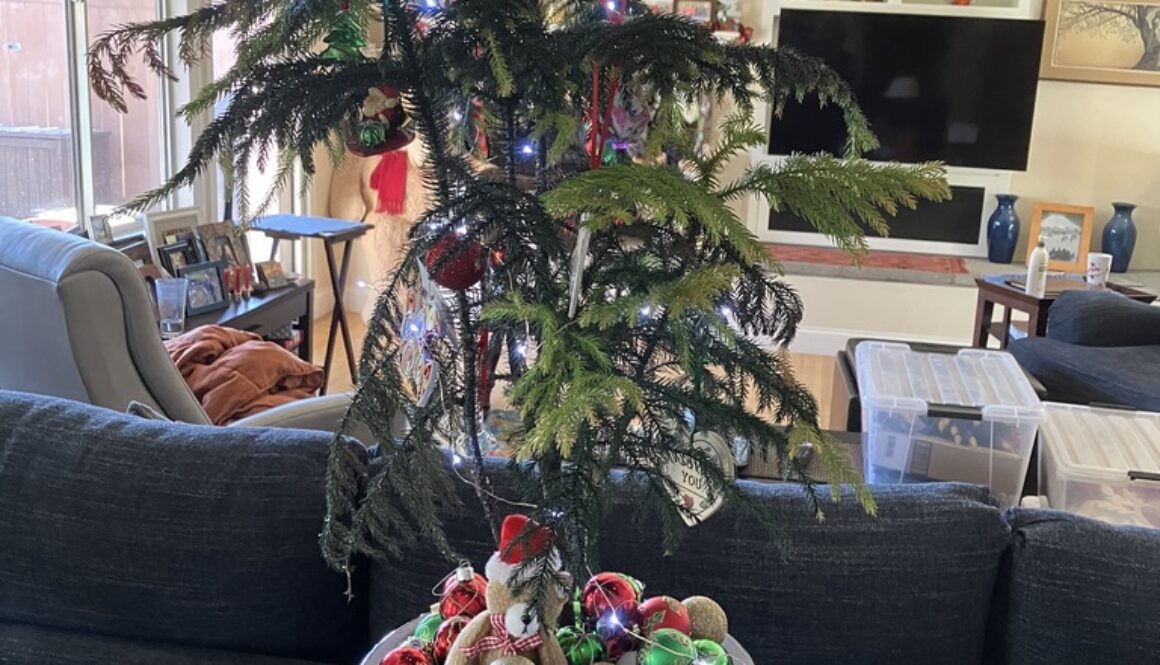
 It’s December 26. The eight days of Hanukkah have passed, it’s one day after Christmas and I wonder what it all means. As we get older and the prospect of grandchildren fades ever more, I wonder what it means and why I work so hard to find special ways to mark the day. I understand that devoutly religious people find spiritual meaning in the holidays. For me, the supposed birth date of Jesus and the miracle of oil lasting longer than expected hold no more spiritual significance than any other days of the year.
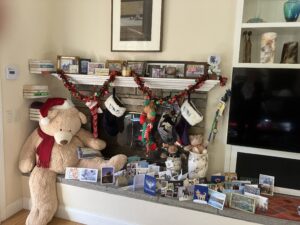 I can find joy in some elements of what we, as a society, have made of this time of year – I like gathering with friends and family, I like sharing meals and exchanging gifts (within reason), and I like reaching out and giving to others who are less fortunate. I don’t like the pressure and the expectations created by our consumerist economy. We are trying to have fewer things and to shed as much as possible, and the same is true for many friends. My husband is also paralyzed by the stress of choosing gifts – afraid he might not pick the right thing, so this year I told him exactly what I wanted, where to buy it, and gave him a coupon for 25% off (yes, it was from Bed, Bath and Beyond.) Instead of me buying it for myself, I gave him the satisfaction of knowing he got just the right thing. That was a win-win for us. For children and those without the means to just buy what they need or want, Christmas can be that opportunity for getting something otherwise unobtainable as a gift, and that’s great. It just doesn’t apply to us. Our adult daughters got a hand-painted card and some cash and they all seemed happy.
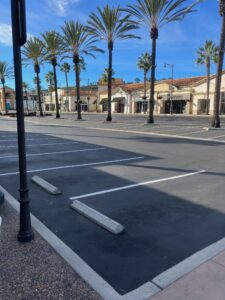 So what really matters? Do we need commercialized holidays to remind us to call loved ones and offer help to struggling neighbors? On Sunday (Christmas) morning, my husband and I took a walk. We went to a nearby shopping center (I think he was hoping the Starbucks was open) and the place was completely deserted except for one maintenance person emptying trash cans. So if Christmas did anything noble, it was to force people to stop buying stuff they don’t need and can’t afford, at least for one day. I got more appreciation from recipients of my little hand-painted cards than for the gifts they accompanied, and that’s great. I had more fun with the watercolors than the shopping.
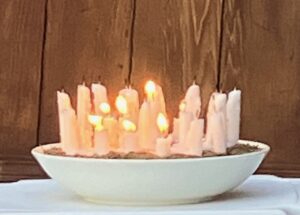 I’m writing this on the tenth anniversary of the Sandy Hook murders. My husband and I were joined by a few friends for an informal outdoor vigil where we lit 26 candles and read aloud the names of the children and teaching staff who died by gunfire at the elementary school in Connecticut. On the first anniversary, more than 100 people joined us in a candlelight vigil where speeches were given and commitments to action were made. Ten years later, children are no safer, and gun deaths are even more of a threat, but there were only five of us gathered.
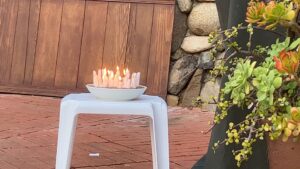 The candles we lit tonight flickered in the wind and appeared to go out, but as the wind shifted, the flames reappeared, as if by magic, and the light remained. It seemed a fitting symbol of our concern and determination to reduce gun violence and wake up our elected officials to take sensible action to make us safer. As had been said many times, it’s not about taking away people’s guns – it’s about ensuring that guns are only available to people who can handle them responsibly. The analogy to cars is often made. We didn’t ban cars when automobile accidents increased – we worked on auto safety and now we have mandatory seatbelts, airbags, and we require drivers to pass a driving test and to have insurance. To operate larger vehicles like busses or trucks, additional training and certifications are needed. Similar steps have been proposed for guns – require a safety course, conduct a background check, mandate insurance, and restrict access to military-style assault weapons. It seems so sensible, it’s hard to understand the resistance.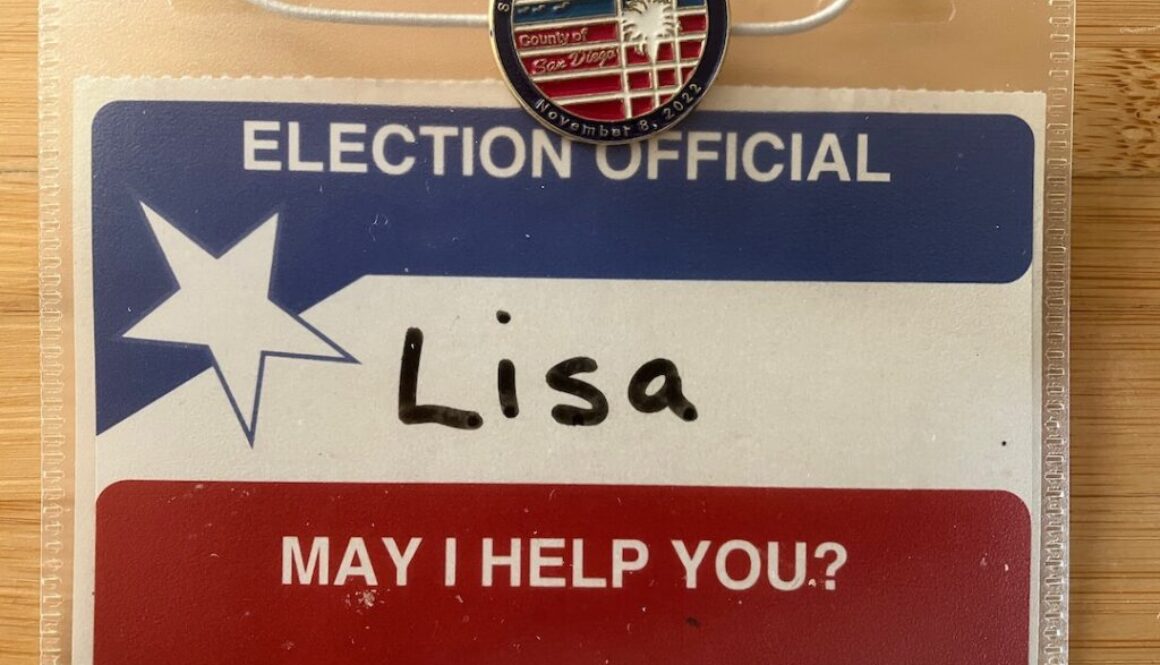
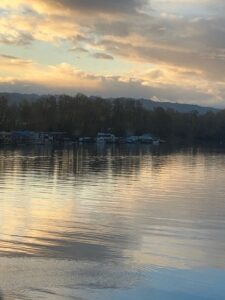 I haven’t posted anything for a while, but it hasn’t been for lack of thoughts to share. Even though I’m retired, it’s hard to find time for reflection and writing. I finally started writing this on the Amtrak Coast Starlight train, traveling from LA to Seattle to spend Thanksgiving on Bainbridge Island with friends and family. We enjoyed California central coastal scenery, then passed through snowy forested areas of Oregon. Sunset and sunrise farther north, and the view of Mt. Shasta; each scene as spectacular as the one before it. And we arrived in Seattle on time. Thanks, Amtrak. I think your workers deserve paid sick leave!
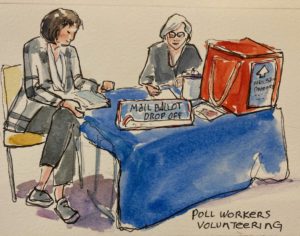
 The November election is over. We can all take a deep breath. I worked at a 4-day polling center near my house. Most voters used the mail ballots sent automatically to every registered voter in California. That was the easiest way to vote, and the complexity of the ballot made thoughtful voting a time-consuming commitment. Clearly some voters were told not to trust mail ballots, and came to the polling center with hostile, suspicious attitudes, determined to cancel their mail ballot so they could vote in person. We served them with a smile and did our best to create a “positive voter experience” as we were trained to do.
 Why be a voter at all? It’s confusing. Does it make any difference anyway? Yes, voting matters. Do you want your school board to ban books or discussion of certain topics? Or do you want teachers to focus on teaching critical thinking skills by presenting controversial topics and helping kids think for themselves? Your vote for in school board elections determines who decides. At every level of government, decisions are being made that impact your life. Fundamental rights are being defined and expanded or limited by Supreme Court justices appointed and approved by the president and Senate – all elected officials. The people making decisions about housing, transit, and climate action are the people that WE elect. If we choose different people, we get different outcomes. So, how do you become an educated voter? Step one: register to vote. It’s easy. If you live in San Diego, go to SDVote.com. If you live somewhere else, look up your Registrar of Voters. Just to be sure, do it TODAY! In general, there are three types of elections: primary, general, and special. The primary election determines who the candidates will be in the general elections that are held every two years in November. Not every office has a primary – some are just in the general election. Special elections can happen at any time to fill vacancies, for example, when an official dies or leaves office for another reason. Once you are a registered voter, you should receive information about specific elections that you are eligible to vote in.
 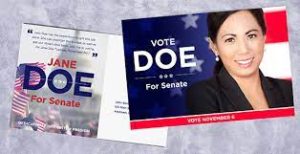 You will see and hear ads, and get lots of mailings and other communications about candidates and issues. Read and listen carefully. Always look at the source, follow the money, and consider what their agenda might be. Mailings must include “paid for by.” Look up any organization you don’t recognize to see who’s behind it. Fact check and talk to knowledgeable friends and colleagues. Consider setting up a potluck discussion group to share information and opinions.
 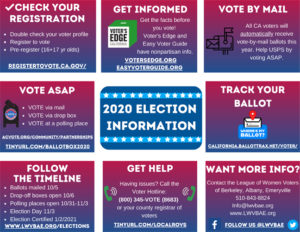 Nonpartisan organizations, like the League of Women Voters, offer objective information. The League studies issues and offers pros and cons for major ballot questions. They post candidate statements and studies on the VotersEdge.org website. The League never endorses candidates but takes positions on some ballot questions. Go to candidate forums and hear directly from the candidates. A challenger with no track record can easily promise to solve difficult problems but may not really understand the legalities and complexities that an incumbent must address. Look beyond specific issues to the candidate’s character, values, and experience. You don’t know what might arise in the future. Past actions speak louder than empty words. No candidate will be perfect. Choose the ones that you think will take us in the general direction you want, or at least the one who isn’t going to take us in a direction you don’t want. “Confirmation bias” makes us inclined to accept information that matches existing beliefs and reject conflicting views. Think critically. Vote wisely. The health and well-being of our families, our communities, and our nation depend on it.
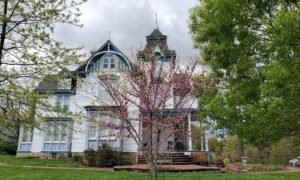 A Mormon, a Mennonite, and a Unitarian walked into a historic inn and gave me hope.
 So what did we talk about at the breakfast table? Sustainability. Climate Change. Carbon footprints. Regenerative agriculture. Open space conservation. I’m pretty sure we do not identify the same way politically (the innkeepers ask that we not talk politics at the table) but we were all on, or close to, the same sustainability page. This gives me hope. We talked about shared values and common concerns. We related as human members of our society. THIS is what we need to do more!
 Whether you believe that some higher power, possibly called God, created the world and gave “man” dominion over all the creatures, or you think we are part of an interdependent web of all existence where no specie is more important than any other, everyone at our table agreed that we have a responsibility to be good stewards of the environment. Religious differences, in other words, but core values that were the same.
 When I said I thought the there were significant benefits offsetting the costs, Dave did acknowledge the intangible benefits (which I would argue can be made tangible) in terms of recruitment and retention of talent, as well as direct savings from reducing waste, reusing water in industrial processes, energy efficiency, and longer-term benefits from reducing future severe weather events. It’s hard to operate a factory in a tornado, wildfire, flood, or extreme heat event. And possibly more important than all this in terms of giving me hope, he was PROUD that he was working on these issues.
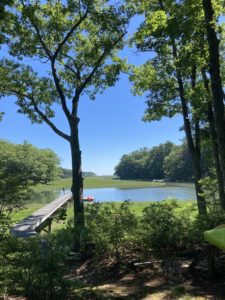 The innkeepers joined in the end of our breakfast discussion. They belong to a green tourism association, recently joined a CSA program, and proudly explained to me their municipal composting program, among other “green” initiatives.
 This weekend I participated in a march and rally, one of many “Bans Off Our Bodies” events to protest the anticipated Supreme Court ruling to overturn women’s right to privacy and to control of their bodies. And then I heard the news about an 18-year-old boy who was able to acquire body armor and tactical weapons and target Black shoppers in Buffalo, killing at least ten people.
 I honestly just don’t understand how anyone can see all the tragic gun deaths and injuries, and still insist that anyone, regardless of age or mental health, should be able to get any type of weapon and ammunition and tactical gear without limit. Most gun violence prevention advocates do not call for taking away legitimately obtained small-scale guns. They argue for sensible regulations – background checks, licensing, mandatory safety training, and a ban on assault weapons. I just don’t understand why that should be a problem. I don’t know how many more innocent people have to die before we can take action at the national level.
 What we need is not for more people to die – we need more living people to VOTE for candidates who WILL do the sensible thing. The Congress is dysfunctional because voters elected those people and citizens who could have voted but didn’t allowed the elections to go without their input. We DO have the power if we will just use it.